What Time Blindness Looks Like
It rarely shows up as "I don't know what time it is". It shows up as:
- Losing hours. You sit down at nine, look up, and it's one o'clock.
- Chronic lateness despite trying. Not carelessness — a genuine miscalculation of how long getting ready takes, repeated daily.
- The planning fallacy, amplified. A task you've done twenty times still gets estimated at half its real length.
- Only two tenses: now and not now. A deadline three weeks away has the same emotional weight as one three months away, until it's suddenly tomorrow.
- Dread of short waits. Ten minutes with nothing to do can feel genuinely long, which is why waiting is disproportionately unpleasant.
- Difficulty starting. If you can't feel how long something will take, you can't judge whether you have time for it — so you don't begin.
Why It Happens
Humans have no dedicated sense for duration. We estimate it indirectly, from attention, memory and how much has happened. That makes it unusually easy to disrupt:
- Attention. Time judgement depends on noticing its passage. Deep absorption in anything — work, a screen, a conversation — compresses it.
- Working memory. Holding "I started at 3:10" while doing something else is itself a load, and it's often the first thing dropped.
- Executive function. Estimating, sequencing and monitoring duration are all executive tasks. Where executive function is stretched, time sense goes with it.
Research on time perception in ADHD is reasonably well established: across time-estimation and time-reproduction tasks, differences show up consistently compared with control groups. It's also reported in autism, after brain injury, in depression, and in ordinary states like exhaustion, stress and jet lag. Everyone has some version of this. For some people it's frequent enough to shape the day.
Why Visual Timers Help
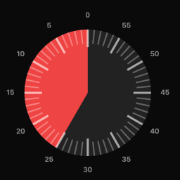
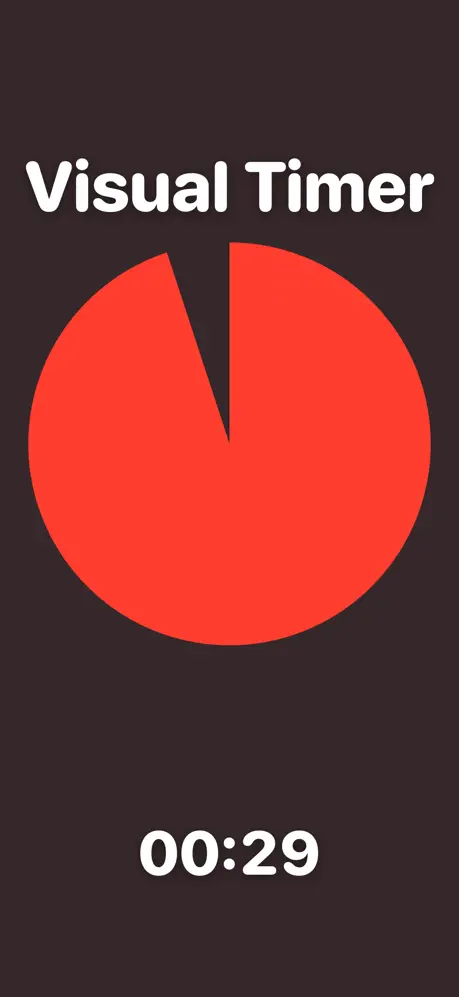
This is the core of it: if time can't be felt reliably, it has to be shown. A visual timer converts duration into something the eye handles effortlessly — area, length, colour — rather than something attention has to track.
- It's readable at a glance. A shrinking disc tells you roughly how much is left in well under a second, with no arithmetic. Digits demand that you read them, subtract, and hold the answer.
- It shows the remainder, not the position. "14:37" is a coordinate. A half-empty ring is an amount. Amounts are what you actually need to decide whether to start something.
- It runs without being watched. The display updates whether or not anyone is monitoring it, which is exactly the job working memory was failing at.
- It makes the end visible in advance. Seeing a segment shrink gives warning. A timer that only announces zero gives none, which is why abrupt transitions are hard.
- It externalises the argument. "The timer says five minutes" is a fact in the room. "You've had long enough" is an opinion, and an opinion can be negotiated.
That last point is why they're used so heavily in classrooms and with children. The timer takes over the role of enforcer, and the adult stops being the one ending the fun.
Worth being straight about the evidence: visual timers are widely recommended by teachers, occupational therapists and ADHD clinicians, and the reasoning above is well grounded in how time perception works. Controlled trials of visual timers specifically are thin. Treat them as a sensible, cheap, low-risk accommodation rather than a proven treatment.
What Else Helps
- Make time visible by default. A running clock or timer in view beats checking one, because checking is the step that gets skipped.
- Time things once, honestly. Most people have never measured how long their commute or morning routine actually takes. One measurement usually beats years of estimating.
- Set the alarm for leaving, not arriving. Then set an earlier one for starting to get ready.
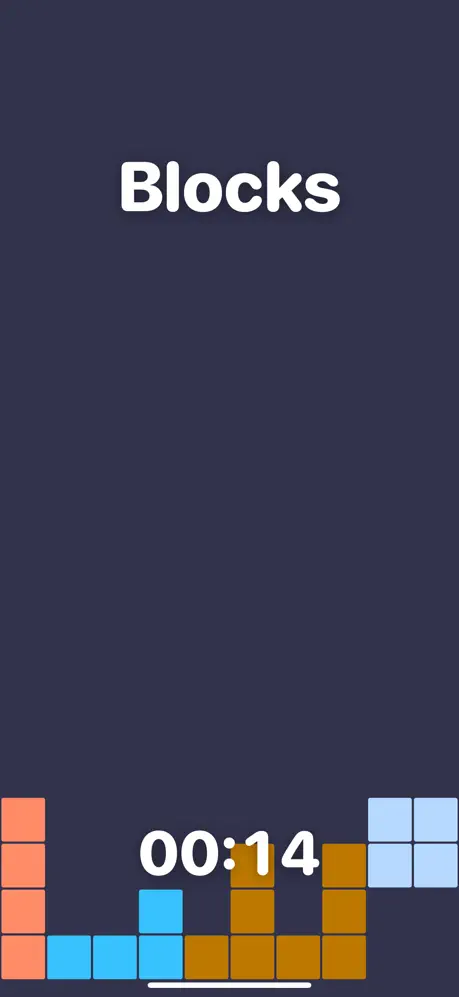
- Break long stretches into marked blocks. Four counted blocks are far easier to sense than "an afternoon" — which is part of why the Pomodoro Technique suits people who lose time.
- Add a warning before transitions. A two-minute heads-up prevents most of the friction at the end.
- Don't rely on feeling the end coming. That's the sense that isn't reliable. Delegate it to something that beeps.
For Parents and Teachers
Young children haven't yet built a sense of duration, so every child is time-blind to a degree — "five more minutes" is genuinely meaningless before that develops. A visual timer gives them something to read directly, which is why it defuses so many transitions: the disagreement stops being with you.
Two things that help: put the timer where it can be seen without asking, and let it finish. A timer that gets extended when there are complaints teaches that the timer is negotiable, and then it stops working.
Try a Visual Timer
The visual timer is the standard shrinking-disc version. For ADHD specifically there's a page on timers for ADHD, and for autism-related transitions a visual timer for autism. With younger children, the timer for kids and toddler timer are friendlier, and a sand timer works well for short waits because the remainder is obvious even to pre-readers.
This page is general information about time perception, not medical advice. "Time blindness" is a colloquial term rather than a clinical diagnosis. If difficulty with time is affecting work, study or daily life, a qualified clinician is the right place to take it.