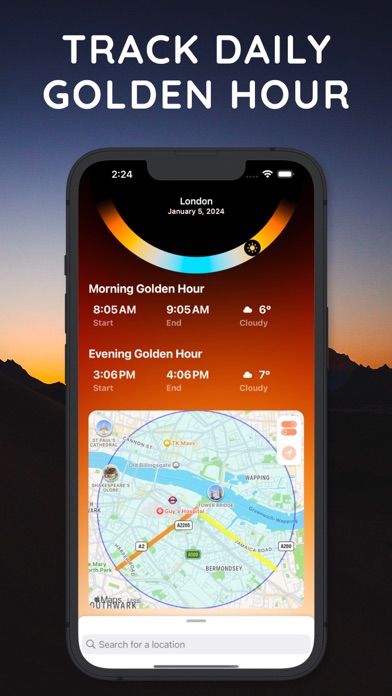
What Time Does Astronomical Dawn Start Today?
Today's astronomical dawn window for your location is shown above with a live countdown. The dark indigo band at the far left of the animated sun path marks the moment the sun climbs past 18° below the horizon — the first, faintest end of night, long before the sky looks like morning.
What Is Astronomical Dawn?
Astronomical dawn is the start of morning astronomical twilight — the instant the rising sun reaches 18° below the horizon. It's the earliest technical "first light": before it, the sky is as dark as it will get; at astronomical dawn a whisper of scattered sunlight begins to lift the faintest stars from view. The window runs upward to nautical dawn at 12° below the horizon.
Why Astronomers Watch Astronomical Dawn
For deep-sky observers and astrophotographers, astronomical dawn is the closing bell. From this moment the sky is no longer fully dark, so the faintest galaxies and nebulae start to fade against a slowly brightening background. If you're imaging through the night, astronomical dawn is your hard deadline — and this page counts down to it.
The Morning Light Sequence
- Astronomical dawn (−18°) — this page. True night ends; the sky's darkest hour is over.
- Nautical dawn (−12°) — the horizon becomes visible.
- Civil dawn (−6°) — bright enough to be out without lights, leading to sunrise.
FAQ
When does night end tomorrow morning?
Astronomical night ends at astronomical dawn — the card above shows the next one with a live countdown.
Why does my page show no astronomical dawn?
At high latitudes in late spring and summer the sun never sinks 18° below the horizon, so there is no astronomical night and no astronomical dawn — the page will say so at your location.
How is astronomical dawn calculated?
From the sun's elevation, computed for your location using only your timezone — no location permission needed. Tap "Use precise location" for street-level accuracy.