What Time Does It Get Dark Tonight?
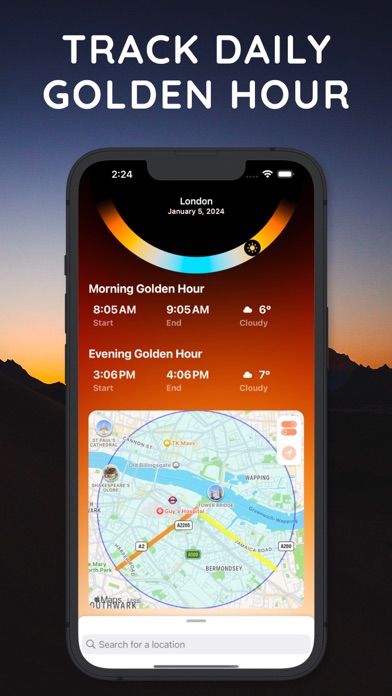
Tonight's dusk window for your location is shown above with a live countdown. The violet band at the right edge of the animated sky marks the dusk stretch of today's sun path — the sun sliding the first 6 degrees below the horizon — after which the scene above (and the sky outside) goes properly dark.
Dusk vs Sunset — What's the Difference?
Sunset is sun; dusk is light. Sunset is the instant the sun's upper edge sinks below the horizon — but it doesn't get dark then. Dusk is the fading period that follows, ending at civil dusk when the sun reaches 6° below the horizon and the last usable daylight is gone. At mid-latitudes that's typically 25–35 minutes after sunset; in the tropics darkness falls noticeably faster, and at high summer latitudes dusk can linger all evening.
The Three Kinds of Dusk
Like dawn, dusk has three astronomical stages: civil dusk (sun 6° below — streetlights on, "it's dark now" for everyday purposes), nautical dusk (12° — the sea horizon disappears), and astronomical dusk (18° — fully dark skies, when stargazers get to work). This page tracks civil dusk, the one that answers "when does it get dark?".
FAQ
What time is dusk tomorrow?
Once tonight's dusk has passed, the countdown above automatically switches to tomorrow evening's window.
How is dusk calculated?
From the sun's elevation: the window from sunset down to 6° below the horizon, computed for your location from your timezone — no location permission needed.
Is dusk the same as twilight?
Evening civil twilight and dusk cover the same window — "dusk" usually names its end point, while twilight names the period. Either way, this page counts down to it.